
Bypass Your Brain’s Natural Resistance to Change
Nasser Salehinia, PhD| Jan 2nd, 2021
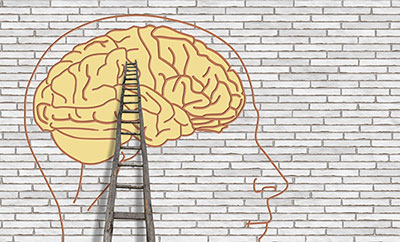
Is changing – doing away with old beliefs, putting the past behind us, improving our behavior and the like as easy as might seem from the outside? What does the brain say about that?
Let’s explore the brain’s response when it faces change.
The brain’s every activity is aimed at protecting our safety, which takes priority over all others. For example, if we are involved in a car accident and have only the resources to either maintain consciousness or keep our heart pumping, the brain will promptly put us into a coma to maintain our blood flow and thus keep us alive.
The Brain’s Demands
The brain demands three things in exchange for protecting our survival: balance, consistency and comfort. Without them, it becomes agitated and reactive.
Why? Because the brain interprets any change or even an attempt at change as a potential threat to its balance, consistency and comfort. In other words, from the brain’s perspective, change means risking our survival. It, therefore, becomes disturbed and wages war against the attempted change.
“From the brain’s perspective, change means risking our survival.”
Faced with the dilemma of change, the brain tries different ways to resolve its conflict as quickly as possible. It tries to persuade us by denying reality, creating self-doubt or engaging in procrastination. If not successful, it then creates resistance in increasing steps, which we experience as tension and even physical illness.
The brain’s purpose for putting up such a fight is simple: it is instinctively protecting our survival despite ourselves.
Research shows that the failure rate in making any meaningful change is up to 90 percent. The reason is that the brain which is at home with balance, consistency and comfort starts building resistance to our efforts to change around ½ second before we make a decision.
Let’s explore this further since we have all attempted to bring some level of change to our lives, with little or no long-term success.
The brain starts resisting change by creating imbalances throughout our minds and bodies. We experience and interpret this as self-doubt, anxiety, vulnerability and ultimately fear, all of which lead us to abandon our efforts to change over time and return to the familiar.
When we experience those intense emotions we begin to question the rationale for stepping out of our comfort zones into the unfamiliar, which is what real change requires.
This internal questioning stirs our deeper concerns about our emotional or physical survival, and our risk- avert brains try to dissuade recalling the memories of our past failures and fills our minds with discouraging yet convincing thoughts and stories as to why we cannot succeed this time either.
How do we experience all of this? Often as an inner voice whispering: Back off. Be careful. Go slow. Compromise. Get real. Don’t trust yourself. Why put yourself through all this? What if? Value others’ opinions more than your own. In short, the brain and mind in coherence generate a deep and convincing sense of self-doubt and insecurity.
As a result, tension and imbalance increase intolerably, and we feel under attack. Inner strength wanes and backing off starts looking like a more sensible choice than moving ahead.
Then the mind creates new beliefs to relieve if only temporarily, the emotional discomfort created by backing off. Believable stories such as It wasn’t meant to be. What else could I do? It wasn’t really that bad. Luck wasn’t on my side. I just don’t have what it takes. And my personal favorite: Everything happens for the best.
The brain, having won its fight to regain balance, consistency and comfort, backs off. We, in turn, retreat back to our comfort zones and our previous habitual ways, even if less than desirable or successful.
What are we to do? Are we forever stuck with these unhelpful patterns?
Certainly not.
So the question is: How do we shift our brain from its protective, resistant mode to its adapting and evolving mode – the one which naturally supports our desire to make progress – without needless anxiety?
The brain has a built-in ability to do so. It is called neuroplasticity: The brain’s ability to change its neural formations and connections in response to how we think, feel and behave. The brain’s shaping and reshaping process is continuous throughout our lifetime; we do it consciously and intentionally or it will happen accidentally.